Korean Food A to Z: The Exchange Student's Eating Guide
May 25, 2026
Korean cuisine is one of the great food cultures of the world — fermented, spicy, communal, and built on a logic that rewards the curious. As an exchange student in Seoul, you have access to some of the best Korean food in the world at prices that feel almost unreasonably low. The problem isn't finding good food; it's knowing what to order. Here's the real guide.
The Foundations: What's Always on the Table
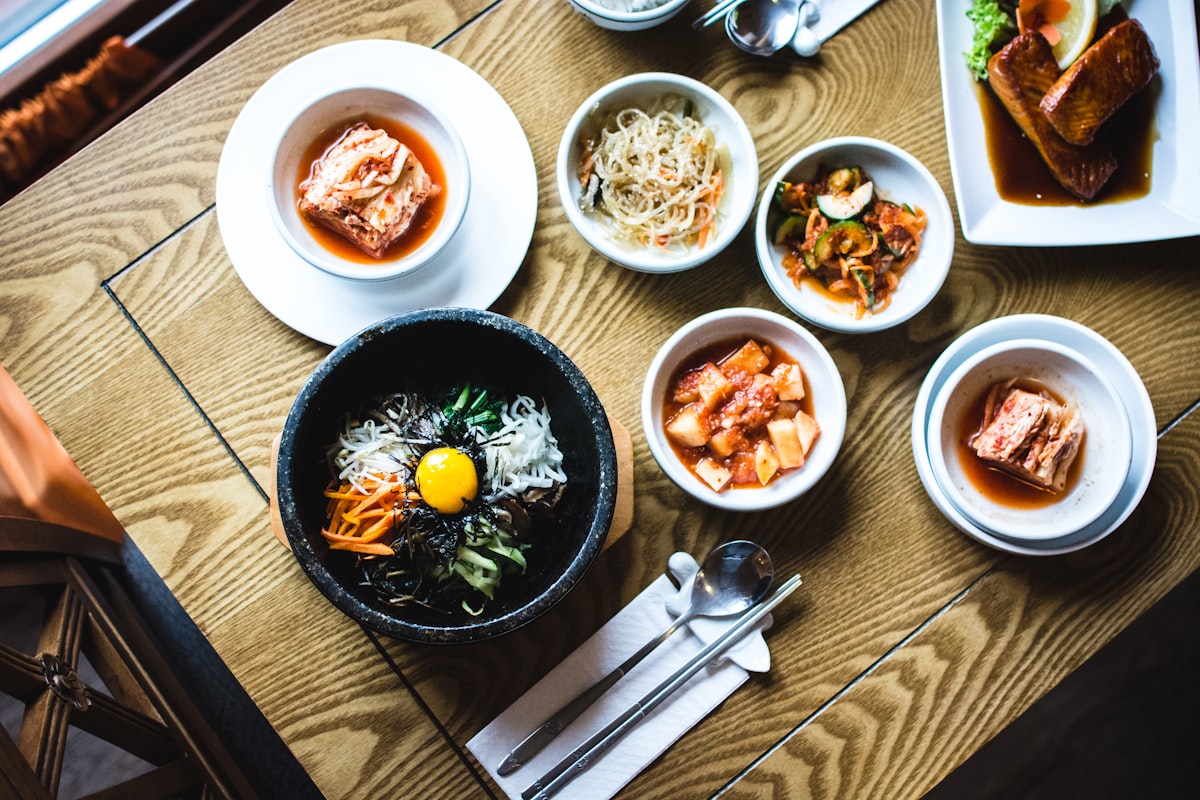
Korean meals are built around bap (밥, rice) and banchan (반찬, side dishes). Understanding this structure unlocks every Korean restaurant experience. You order a main dish; the rice and banchan (kimchi, namul vegetables, pickled things, soups) appear automatically and are shared by the table. This is why Korean dining feels so abundant even at modest prices — the table fills up before you've ordered a single thing.
Kimchi (김치) deserves its own mention. There are over 180 varieties of kimchi in Korean cuisine; the bright red cabbage version (baechu kimchi) is just the default. Kkakdugi (radish), oi sobagi (cucumber), and gat (mustard leaf) kimchi are all worth trying. A good restaurant's kimchi quality tells you everything about the kitchen.
Dishes to Know by Name
Must-Try for Every Student
- 삼겹살 (Samgyeopsal) — Thick pork belly grilled at the table, wrapped in lettuce with garlic, doenjang paste, and kimchi. The defining Korean social meal. Price: ₩14,000–₩20,000 per person including banchan and rice.
- 된장찌개 (Doenjang jjigae) — Fermented soybean paste stew with tofu, zucchini, and mushrooms. Rich, earthy, deeply satisfying. Available everywhere, usually under ₩9,000.
- 비빔밥 (Bibimbap) — Mixed rice bowl with vegetables, egg, gochujang. The dolsot (stone pot) version arrives sizzling and creates a crispy rice crust at the bottom that's one of Korean food's great textures.
- 순두부찌개 (Sundubu jjigae) — Silky soft tofu in a spicy broth with egg and seafood or pork. One of the best hangover foods in any culture. ₩8,000–₩10,000.
- 떡볶이 (Tteokbokki) — Chewy rice cakes in a spicy-sweet gochujang sauce, often with fish cakes. The defining Korean street food; available everywhere from street carts to sit-down restaurants.
- 냉면 (Naengmyeon) — Cold buckwheat noodles in either a tangy broth (물냉면) or spicy sauce (비빔냉면). Essential in summer; takes getting used to but becomes addictive.
Regional Specialties Worth Seeking
- 감자탕 (Gamjatang) — Pork spine and potato stew; a Seoul speciality, rich and intense, best eaten in a large group late at night
- 해물파전 (Haemul pajeon) — Seafood and spring onion pancake; crispy on the outside, chewy inside; best with makgeolli on a rainy day
- 설렁탕 (Seolleongtang) — Milky white beef bone broth, served plain with rice and green onions; add salt yourself; the Korean version of chicken soup
- 간장게장 (Ganjang gejang) — Raw crab marinated in soy sauce; an acquired taste, but Koreans call it "rice thief" (밥도둑) because it makes you eat too much rice
Ordering Without Korean
Most Korean restaurants have photo menus or touch-screen ordering tablets (키오스크). Point at the photo, tap the quantity, confirm. If there's no menu in English or with photos, open your phone's camera in Google Translate — it translates Korean menus in real time through the lens.
Key ordering phrases: 이거 주세요 (igeo juseyo — "this one please"), 하나 더 주세요 (hana deo juseyo — "one more please"), 계산해 주세요 (gyesan hae juseyo — "bill please").
Navigating Spice
Korean food has a reputation for being very spicy that is partially earned. The heat comes from gochugaru (red pepper flakes) and gochujang (fermented pepper paste), and the spice level varies significantly by dish and restaurant. If you have low spice tolerance, ask for 안 맵게 해주세요 (an maepge haejuseyo — "please make it not spicy"). Most restaurants will accommodate this, though some dishes lose their character without the heat.
If you find something too spicy: milk is more effective than water. Korean restaurants always have complimentary water (물) — ask for 우유 (uyu, milk) if you're genuinely struggling.
The Drink Pairings
- 소주 (Soju) — Korea's national spirit; clear, slightly sweet, 16–25% ABV. Drinks with everything. One bottle (₩4,000–₩6,000) serves 3–4 people.
- 막걸리 (Makgeolli) — Cloudy, lightly fizzy rice wine; lower alcohol, pairs specifically well with pajeon and bibimbap. Usually ₩3,000–₩5,000 per bottle.
- 맥주 (Maekju) — Korean beer; Hite, Cass, and Terra are the main domestic brands; all light lagers. Mix with soju for 소맥 (somaek) which is the standard drinking culture format.